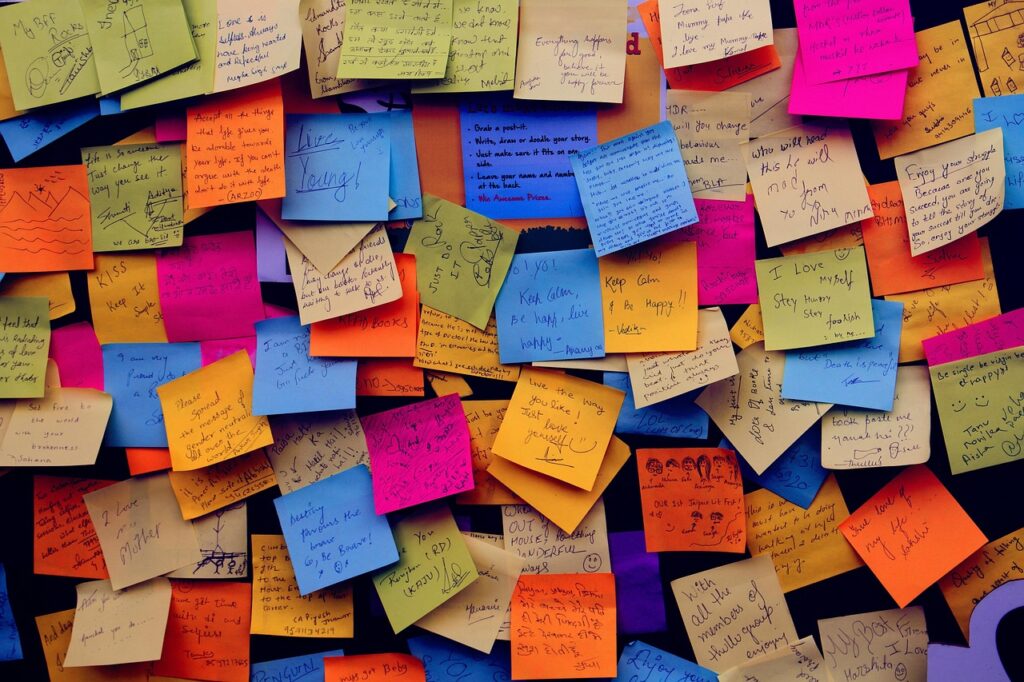
Learners are provided with a prompt for which they need to generate ideas. Each learner is given a Post-it note on which they write answers to the prompt, and then students work together to categorize these responses by common themes.
Co-Curricular (experiences outside of the formal classroom but contribute to student learning) Please contact us at activelearning@uga.edu with an example to include!
Universal Design of Active Learning
Universal Design for Active Learning UDL and active learning share a common goal: centering all students in the learning experience. When designing an activity, UDL‑informed instructors consider how the activity could be open to all students while preserving the core learning goal.
Physical Considerations If handwriting or movement is not viable, allow digital submission. Have the instructor group responses if needed.
Timing & Pacing Allow adequate time for idea generation and writing before posting. Avoid rushing the writing phase.
Social Interaction Allow anonymous posting where possible. Avoid requiring public defense of posted ideas unless voluntarily scaffolded.
Information Accessibility Allow reference to notes or course materials — focus stays on idea quality, not recall.
Ways to Participate/Express Allow contribution by sticky note, digital submission, or dictation to a partner or instructor.